

Beautiful Buttercup Squash
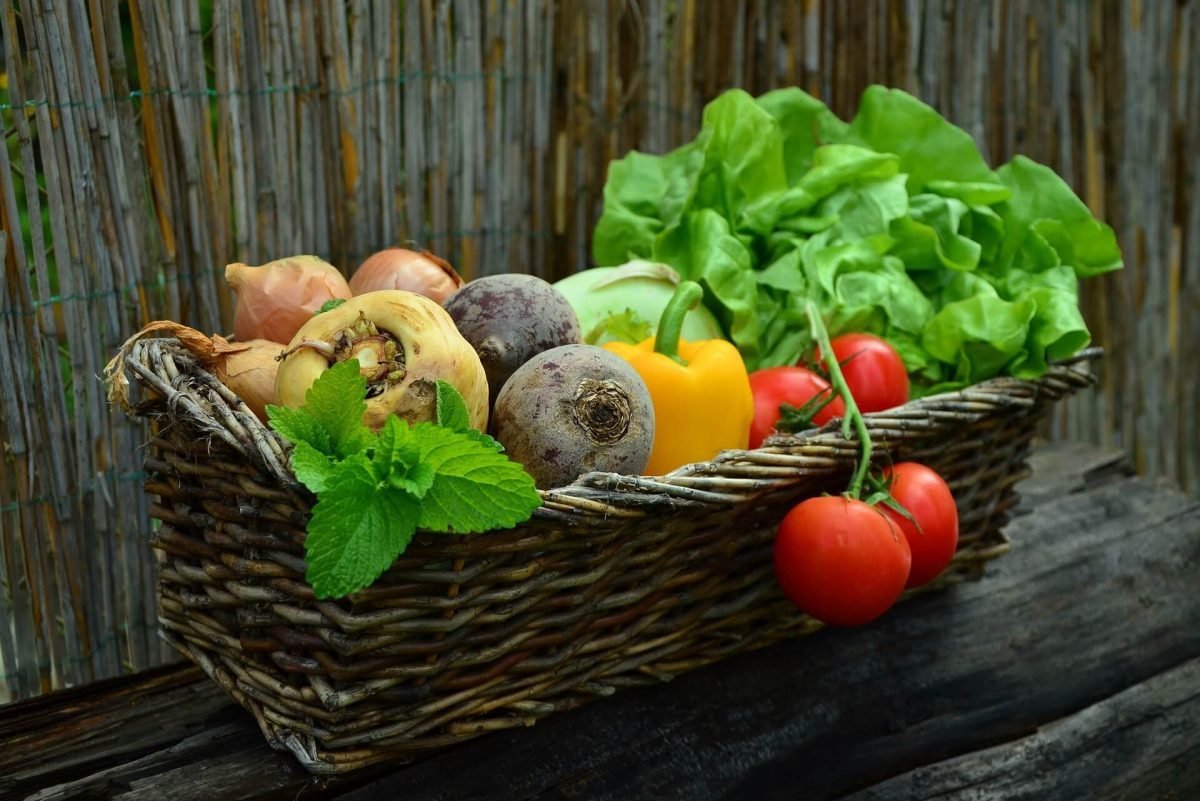
Cooler weather fades too fast in Central Florida, but we can keep the season alive through the hearty flavors and colors of winter produce! Buttercup squash is a wonderful choice for seasonal recipes. It has a sweet and nutty flavor with a consistency similar to that of a sweet potato. Buttercup squash are dark green in color and rounded in shape. They are small, but typically weigh one to four pounds due to their dense flesh. Our selection of organic squash have a deep yellow-orange color inside, indicative of their high Vitamin A content. These squash are creamy, yet low in calories and fat. A modest serving of 1/2 cup cooked squash is packed with calcium, magnesium, phosphorus, and potassium.
Our own Michelle Rosica contributed an incredible recipe for a Buttercup squash and pear soup. All ingredients can be found at the online market, the squash and pears are available in store right now!
“This is a pretty, full of flavor, and fool-proof soup. The buttercup squash offers a light yet earthy flavor, deepened by the addition of cinnamon, nutmeg, and bay leaves. The pear adds a bit of sweetness, and the ginger – a hint of tang.
2 pounds buttercup squash (2 @ $1.61/lb. = $3.22)
3 medium bosc pears, chopped (from bag of 12 @ $5.92 = $1.48)
1/2 yellow onion, chopped (from 0.61 lb onion @ $1.01/lb. = $0.30)
1/2 – 1 tablespoon of ginger powder ( 1/2-1 tbsp @ $1.20/oz. = $0.20-.45)
6″ stick of cinnamon (from 5 sticks @ $1.20 = $0.24)
1 nutmeg clove ( 1 @ $0.30)
2-3 bay leaves ( from ~15 leaves @ $3.00 = $0.40)
5-6 cups liquid – half veggie broth, half water (3 cups @ $4.79/qt. = $2.40)
1/2 cup almond milk (optional) (from $3.99/32 oz. = $0.48)
salt and pepper to tasteTotal cost: $9.12 or only $2.28 for four generous servings!
To prepare:
Start by cutting the buttercup squash in half and drizzle with oil, salt, and pepper. Place the cut side down on baking sheet and roast at 400 F for 45 minutes, or until squash is soft. Meanwhile, saute the onion in oil until it is translucent, about 3 minutes. Add chopped pear, ginger, and spices and continue cooking until onion and pear are soft, about 10 minutes. Add the broth and water, let simmer until the squash has finished roasting. Remove the cinnamon stick, bay leaves, and nutmeg clove from the pan. Remove the squash and allow to cool for a minute or two, then scoop the squash flesh into the soup. Blend with an immersion blender, or blend small batches at a time in a standing blender until the soup reaches an even consistency. If a creamier texture is desired, stir in up to a half cup of almond milk. Serves 4-6.”
We enjoy sharing recipes from our kitchens, and would love to hear your experiences trying our creations!
June 2012 Newsletter
- At June 6, 2012
- By Michael Tiner
- In Blog Post, Co-op Business Development, Event, News
0
June 2012 Newsletter
| |||
Beautiful New Website! Exciting Kids Event! Local Art Opening! Blue Berry Mania! & More! | |||
| ATTENTION KIDS & PARENTS! DON’T MISS THIS EVENT.
Who: Kids! {ages 7-15 years old} What:Snack War Challenge What’s That? Its kinda like a healthy themed Iron chief episode staring your kids. *Free to Participate* | *Everyones a Winner* *Prizes for Top Snack Warriors* presented by the Reid Family authors of the newly release book: Portion Size Me RSVP: What’s the Point? This event is design to be fun and educational through demonstration and a little healthy competition. The point to teach our kids that good healthy decisions are within their grasp. To create excitement in youth to lead in making the best decisions for themselves. How is the challenge going to work? We’ll have three Snack Wars for different age group kids. 13-15yrolds go 1st |10-12 go 2nd|7-9 last| Each participant will take place at a station behind the table with a few moments to look into our refrigerator and pantry cabinet to get an idea of what is available. We will also have different serving plates and utensils for you to choose from. No cooking will occur, everything must be made fresh. When you are told to do so by Marshall you will open your tub of secret ingredients. Then you will have 12 minutes to make your snack for three judges. That means you have to put your snack on three separate plates or all on one platter. When the 12 minutes are up participants will go stand at the judges table to present their creation for evaluation. The judges will then tally your healthy score card and a winner and runner up will be selected for each age group. Every is a winner with Sweat Prizes awarded to the judges top pick snacks. Event Parking: Oniste Farm Store parking for this event will fill up fast, so please plan to use one of the designated overflow parking lots right around the corner. ______________________________ mark your calendar! Next Event: Local Art Opening June 23rd 12noon – 5pm Its going to be a party! The 1st of many local art and music exhibits to come. *Music * Raffle Prizes *Food * Featuring photography by Sam Bourne; plus artwork & live painting by Natasha Brockman will also be onsite with smiles, info & delicious samples. ![]() | ||
| |||
How California Could Force the Rest of the US to Label GMO Foods
- At June 3, 2012
- By Michael Tiner
- In News
4
By Tom Philpott
Mother Jones, May 31, 2012
Straight to the Source
In November, California voters will decide on a ballot initiative that would require labeling of all foods containing ingredients from genetically modified crops. The initiative made it to the ballot after almost 1 million Californians signed a petition in favor of it-nearly double the 504,760 signatures needed under the state’s proposition rules. The campaign that organized the push to get the measure on the ballot focused on possible health effects of GMO foods.That would send a shockwave through the food industry-one that could ultimately be felt on the industrial-scale US farms that have been devoting their land to GMO crops for years, and the companies that profit from selling them patented seeds and matching herbicides. The reason isn’t just that California represents an imposing chunk of the US food market. It’s also that a food-labeling law that starts in California is unlikely to stay in California.
MeetUp with Your Local Foodies
- At May 10, 2012
- By Michael Tiner
- In Blog Post, Event, News
0
We think you’ll like this MeetUp coming up on May 17 at Dandelion Communitea Café. Maya Fiallos from Maya Papaya Organic Farm will speak about community shared agriculture (CSAs) and their farm in Oviedo. It looks fun and informative, and we hope to see you there!
Local is Lovely…and a Growing Choice
- At May 10, 2012
- By Michael Tiner
- In Blog Post, News
0
We found this interesting article we want to share with you about the growing popularity of farm markets and similar businesses. We are very lucky to have over fifty sustainable farms within a 50-mile radius of us, and we hope this number grows. When you shop with us, you help us grow and also help all these farm families and other producers stay working at what they love: sustainably healthy practices. Read on…right here!
Fresh Baked News

While you’ve enjoyed the breads and other baked items we’ve had for a while, now you can more easily see our offerings in our new bakery case. We hope you’ll come in and see what else we have that new. If you haven’t been in to the Farm Store in a while, it’s changed!

Yes, we listen to you when you tell us what you want and need, and we make wonderful improvements each day, from our store layout to additional items for purchase. Feel free to leave a comment about something you’d like to see in our Farm Store. Better yet, come in to the Farm Store and tell us; the pastries taste so much better in person!
A Feast for the Eyes and Ears
- At May 10, 2012
- By Michael Tiner
- In Blog Post, News
0
On a lighter note than our last entry, we couldn’t agree more when Rhiannon Giddens from the Carolina Chocolate Drops sings, “…the best kind of food is made by hand, the only place to get it is from the land.” in their brand new video called Country Girl. Check it out here!
That spread of delicious food on the dinner table has our mouths watering! Come on down to the Homegrown Co-op’s Farm Store today and get just the items you need to create your own amazing dinner spread this evening.
Humane and Sustainable Practices
- At May 10, 2012
- By Michael Tiner
- In Blog Post, News
0
The Humane Society of the United States recently reported that Tyson Foods buys pigs from a factory farm facility in Wyoming that practices unethical and unhealthy systems for its animals. A video, taken by an undercover investigator at Itoham Foods, Inc., (the facility under the proverbial gun) shows pregnant sows in containment stalls so small they cannot turn around. In addition to the limited movement, the video also shows adult and baby pigs being physically abused by employees, and being left either sick, injured or dead without treatment or removal from the facility. Not only is this cruel and unnecessary, it produces a risk to the food supply via harmful bacteria and other contaminates, not to mention the stress and fear endorphins surging through the animals’ systems, which are then concentrated in the tissue and consumed by humans, posing an additional risk to our health. Typically, these animals are regularly injected with antibiotics, which, with regular ingestion of these tissues, can affect the way antibiotics work in human systems. The list of negatives goes on and on.
Unfortunately, this is not a unique scenario in big agribusiness; we’ve all heard stories similar to this time after time, and this is just one small facet of how they’re causing problems that drift down the line and onto our plates at home. For instance, large, industrial farms dealing in livestock are the major source for pathogenic bacteria in the food supply, air pollution due to the excess fertilizers and other chemicals needed to maintain the enormous amount of crops they grow, and poor working conditions for the people who work on these farms.
How can we each do our part to help stop this and other horrible things from happening? The answer is easy…and not so easy. The easy part — the part you can do right now — is to buy your food from local, trusted sources: farmers whose daily practices are sustainable, humane and organic. These are the kind of farmers and culinary artisans we feature at Homegrown Co-op. In fact, that’s the only kind of people we work with. That makes it easy for you to know you’re supporting the kind of families who are making a difference for good.
The not-so-easy part of the big picture is that we must make our collective voices heard if we want change to happen. This can involve things as simple as writing or calling your representatives, or as complicated as starting and maintaining a movement. Nevertheless, you can start now with the simple act of choosing the organic, sustainably-run farms and producers over the large corporations and agricultural conglomerates who do the most damage.
Folks, This Ain’t Normal: An evening with Joel Salatin
- At April 20, 2012
- By Michael Tiner
- In Blog Post, Event, News
0

Join Joel Salatin for “Folks, This Ain’t Normal” presented by Rollins College, Homegrown Local Food Cooperative, and Slow Food Orlando
Thomas P Johnson Distinguished Visiting Scholar will present
Folks, This Ain’t Normal:
A Farmer’s Advice for Happier Hens, Healthier People, and a Better World
Wednesday April 18, 2012
7 pm in the Bush Auditorium, Rollins College
Farmer and food movement pioneer Joel Salatin, a farmer, author and lecturer whose Polyface Farm and “beyond-organic” agricultural methods have been featured prominently in books, movies and numerous national publications, will speak on his latest book, “Folks, This Ain’t Normal.”
His book conveys the gravity of the ecological and cultural crisis our country is facing. Salatin hopes that when you close this book you will “buck up, and re-find your responsibilities to this Earth we call our nest.” Differing from today’s industrial commodity-based machine-driven farms, Polyface is a local, pasture-based, relationally oriented farm.
His innovative farming system—where the animals live according to their “ness,” the earth is used for symbiosis, and happiness and health is key—has gained attention from around the country. Recognition for his ecological and local-based farming advocacy includes an honorary doctorate, the Heinz Award, and many leadership awards.
Named by the New York Times “the high priest of the pasture,” Salatin has also authored seven books on alternative farming and sustainability issues.
Presented by Rollins College, Homegrown Local Food Cooperative, and Slow Food Orlando
www.HomegrownCoop.org
FREE Event
Seating is first come, first served
April 2012 Newsletter
- At April 6, 2012
- By Michael Tiner
- In Event, News, Uncategorized
0
April 2012 Newsletter
Expanded Farm Store Hours!
Joel Salatin Event!
Development Preview.
Good Bye Christine Henwood.
Exciting Events! 7 Days a week of Local Food! And more! | |||
| DON’T MISS THIS EVENT!
Folks, This Ain’t Normal: A Farmer’s Advice for Happier Hens, Healthier People, and a Better World An evening with Joel Salatin Wednesday April 18, 2012 7 pm in the Bush Auditorium, Rollins College
Farmer and food movement pioneer Joel Salatin, a farmer, author and lecturer whose Polyface Farm and “beyond-organic” agricultural methods have been featured prominently in books, movies and numerous national publications, will speak on his latest book, “Folks, This Ain’t Normal.” His book conveys the gravity of the ecological and cultural crisis our country is facing. Salatin hopes that when you close this book you will “buck up, and re-find your responsibilities to this Earth we call our nest.” Differing from today’s industrial commodity-based machine-driven farms, Polyface is a local, pasture-based, relationally oriented farm. His innovative farming system—where the animals live according to their “ness,” the earth is used for symbiosis, and happiness and health is key—has gained attention from around the country. Recognition for his ecological and local-based farming advocacy includes an honorary doctorate, the Heinz Award, and many leadership awards. Named by the New York Times “the high priest of the pasture,” Salatin has also authored seven books on alternative farming and sustainability issues. FREE Event *** Parking for the event should be at the SunTrust Parking Garage off of Park Avenue. The parking garage gives the closest access to the Bush Auditorium in the Bush Science Center. There is NO parking on campus, and due to construction, access to the auditorium is easily reached from the garage or, if you prefer, in downtown Winter Park. *** VISIT US NEXT SATURDAY AT CENTRAL FLORIDA EARTH DAY! April 21st, Lake Eola 10 am – 6 pm Visit our booth for samples and bring a friend! *** Also on April 21st, at the First United Methodist Church of Winter Park, check out the Great Cloth Diaper Change to learn about cloth diapering, a more planet-friendly alternative that saves families money, too. The event is free and open to the public. Register for free at www.FairytaleDeals.com Store Hours: | ||
| |||


Christine and her husband Jason Greene are moving out of state and we wish them the best in their future endeavors!