
Holiday Gift Baskets

Posted by: megan  :  Category: Uncategorized

holiday

Holiday Gift Baskets

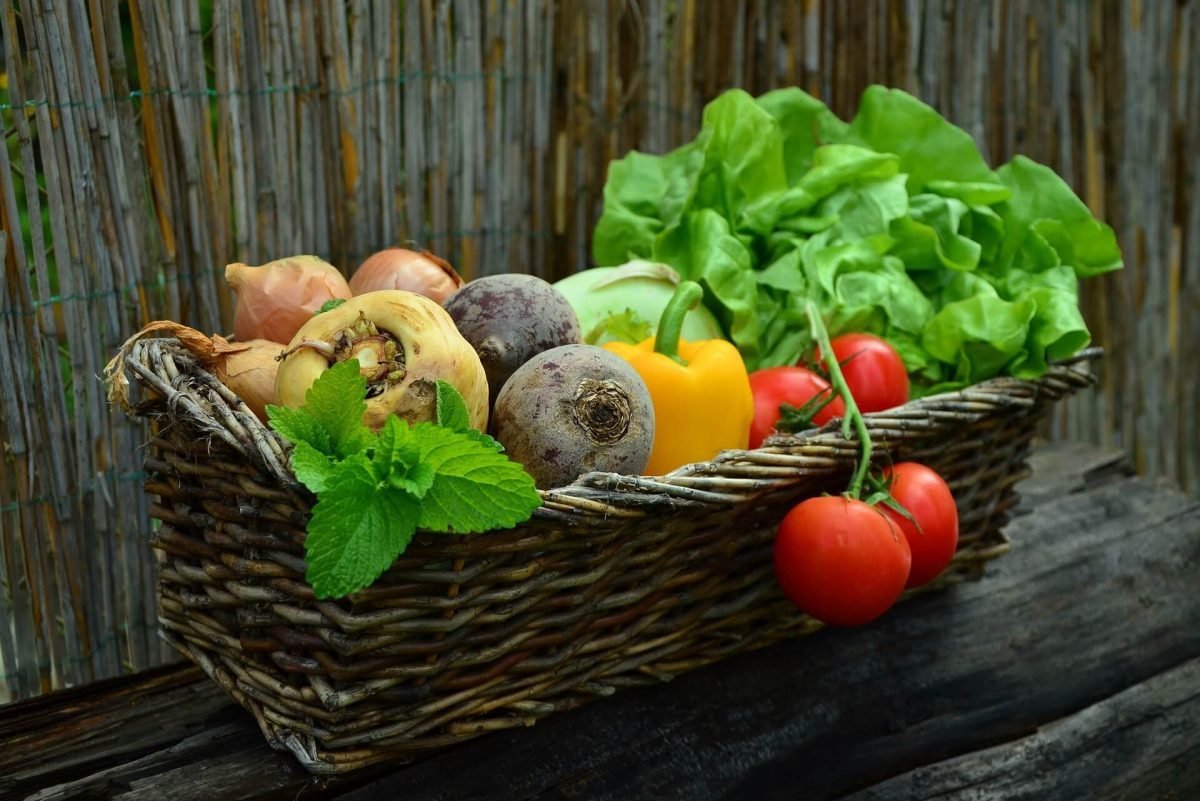
Give the gift that gives back to local farmers while offering the finest, most delicious gift to those on your holiday list.

Great for clients, customers, and employees too!

Holiday Seasonal Produce Gift Baskets
Small –$30 ($35 value) Feeds 1-2

Medium – $50 ($60 value) Feeds 2-4

Large – $80 ($95 value) Feeds 3-5

Produce is locally grown and certified organic.

Wine and Cheese Basket $40
A bottle of wine from Lakeridge Winery with
locally made cheese from Winter Park Dairy

Bread, Fruit and Cheese Basket $35

Winter Park Dairy cheeses, Olde Hearth Breads, and locally grown fruit

Add-On Membership – $40 Value

$25 when included in gift basket

Gift Farmworker Families In Need Through Homegrown
Provide a Seasonal Produce Basket for Central Florida’s Low Farmworker Families This Holiday Season.

Reserve Yours Today! 407-595-3731
www.HomegrownCoop.org

Join Homegrown and Friends at the Ourlando Farm to Table Event

Posted by: Homegrown Co-op  :  Category: Uncategorized

It’s a Food Fight!

November 15, 12:30 PM to 2:30 PM

Featuring the the documentary “Food Fight” by Chris Taylor and food by Chef Josh Oakley.

Tickets: $18, includes hors d’oeuvre, beer, coffee and tea.

Come meet our local farmers and local food vendors.

The event begins with passed hors d’oeuvre made with locally grown produce by Chef Josh Oakley, the executive chef of Enzian. Followed up with the showing of Food Fight. www.foodfightthedoc.com Read more…

A-Live and Healthy

Posted by: megan  :  Category: Uncategorized

An interview with chef and founder of A-Live and Healthy, Kim Smith:

How long have you been a raw food chef? What was your inspiration?   In 1992 I found myself at the Optimum Health Institute, which is an Ann Wigmore center, in Lemon Grove, CA.  They promote the use of wheatgrass and living food for optimum health.    I thought I was taking myself to a fancy spa to be pampered.  It was quite a surprize when I realized what I was actually going to be doing for 3 weeks.  I felt so much better after 3 days that I decided to finish the program.  It changed my life.

Where did you learn to prepare raw foods?  I’ve always been comfortable in the kitchen.  I have taken a couple of classes with different people and read lots of books and I experimented.  In 2001 I worked in a living foods restaurant for about 8 months and I learned alot there.  When your are using the best ingredients it’s hard to go too wrong.

Did you have any professional cooking experience before A-live and Healthy? Not professional cooking, but I started cooking when I was very young.  I was frying eggs and bacon when I was 5.  My father’s family was Hungarian and big eaters.  At the holiday’s we feasted and there was always lots of baking.  I loved all of it and my kitchen was a popular spot with my family and friends.  Learning to do it all without turning on the stove was quite an adjustment at first.  Now my kitchen is equipped with everything but pots and pans.

Are your a native Floridian? If not, where are you from? I am originally from Michigan.  I came to Florida for a vacation in 1988 and I’ve been here ever since,  except for the time I spent in California.  I love it here and can’t imagine living any where else unless it was the tropics.

What’s your favorite raw food dish? It’s hard to pick a favorite I love anything that’s prepared with fresh organic ingredients.    My favorite meal is simply a beautiful salad with lots of fresh greens and veggies.

Do you eat an entirely raw food diet?  No not entirely.  I feel best when I eat raw, and I never eat flesh or dairy, but I eat cooked food occasionally. I eat whatever I want whenever I want it.  Fortunately the things I want these days are the things that are good for my body.

What do you think the most important aspect and/or benefit of a raw food diet?  For me it’s the way I feel.  My digestion is good, I have almost inexhaustable energy, I sleep very well, I feel peaceful and happy most of the time, and I never get sick.  When people tell me they can’t afford to eat organically I say “ I can’t afford not to.”   I’ve saved thousands of dollars in doctor bills and sick days by eating organically and vegan    It’s a lifestyle  that will allow me to live my life to the fullest as long as I’m alive and that’s important to me.

Review: Processed People

Posted by: Homegrown Co-op  :  Category: Uncategorized

Processed People is a recently launched movie with an important message: take care of our bodies now, or regret it later as we care for our diseases.

This 40 minute film exposes how we are processed through a system of processed foods from birth. If you eat on a regular basis (as in once or more a day) fast food or other processed food (who doesn’t?) you must see this movie because it explains how the increased intake of processed foods over the last 60 years has caused us to become sicker and fatter as a nation.

The film may seem short, but the bonus dvd features – almost 3 hours of expert interviews – will satiate the appetite of health junkies and information seekers alike. Plus, the brevity is a great way to introduce the topic to our friends and loved ones who may be receiving this important information for the first time.

Learn more at processedpeople.com.

killing the chicken, destroying the myth!

Posted by: megan  :  Category: Uncategorized

Whole Foods Market and United Natural Foods, Inc.: Undermining Our Organic Future

After four decades of hard work, the organic community has built up a $25 billion “certified organic” food and farming sector. This consumer-driven movement, under steady attack by the biotech and Big Food lobby, with little or no help from government, has managed to create a healthy and sustainable alternative to America’s disastrous, chemical and energy-intensive system of industrial agriculture.

However, the annual $50 billion natural food and products industry is threatening to undermine the organic movement by flooding the marketplace with conventional products greenwashed with “natural” labeling. “Natural,” in the overwhelming majority of cases, translates to “conventional-with-a-green-veneer.” Natural products are routinely produced using pesticides, chemical fertilizer, hormones, genetic engineering, and sewage sludge. “Natural”,”all-natural,” and “sustainable,” products in most cases are neither backed up by rules and regulations, nor a Third Party certifier. These are label claims that are neither policed nor monitored. For an evaluation of eco-labels see the Consumers Union Eco-Label website.

For example:

* Tests Show Widespread Presence of GMOs in So-Called “Natural” Foods

* So-called “Natural” non-organic soy milk products, including leading brands such as “Silk,”are made with conventional soy lecithin, utilizing the hazardous chemical, Hexane, as an extraction agent.

* Dozens of “natural” and “made with organic” personal care and household cleaning products contain known carcinogens, such as 1,4 Dioxane. Just about the only personal care products you can trust are those bearing the “USDA Organic” label.

* 90% or more of the vitamins and supplements now on the market labeled as “Whole Foods,” “natural” or “food based” are spiked with synthetic chemicals.

Despite the massive popularity and demand for certified organic products, retailers like Whole Foods Market, and wholesalers like United Natural Foods Inc., continue to push “natural” products at a premium price, while, in effect slowing down the growth of organics with their near market monopoly. In fact, the majority of products sold and distributed by Whole Foods Market and UNFI are not certified organic, but rather so-called “natural.” Meanwhile, independent and cooperative grocers often offer more certified organic products at competitive prices.

Will you stand up for organics?

Contact Whole Foods Market and UNFI today and tell them that you will buy only certified organic products for you and your family.

all should make a penny more????

Posted by: megan  :  Category: Uncategorized

* By Laura Wides-Munoz
The New York Post, June 4, 2009
Straight to the Source

MIAMI (AP) — Two Florida farms have decided to participate in a deal to boost the wages of the state’s tomato pickers, joining an agreement with a farmworker advocacy group and upscale Whole Foods Market, the grocery chain announced Thursday.

The Coalition of Immokalee Workers and Whole Foods said the farms will pass on to pickers a net penny more per pound of tomatoes sold to the Austin, Texas, based company. Whole Foods will foot the bill.

Florida provides most of the nation’s domestic winter tomato crop.

Florida workers earn about 47 cents per 32-pound bucket. That can mean an average of about $12 an hour for the hardest workers, usually immigrants who receive no health insurance nor overtime.

If all Florida tomatoes purchasers joined the penny deal, the farmworkers could nearly double their earnings. The idea is that the national restaurant and grocery chains that have the deep pockets pay the extra money, including administrative costs, and the farmers pass it on to the workers when they receive their checks. The deals also permit the coalition to serve as a mediator when labor complaints arise.

The coalition, which claims membership of about 4,000 mostly migrant workers, gained national attention when it reached similar deals in recent years with fast-food chains including McDonald’s and Burger King corporations.

But such agreements have existed on paper only since the Florida Tomato Growers Exchange, which represents most of the state’s tomato growers, threatened two years ago to levy a $100,000 fine on any member who participated.

Whole Foods signed the deal with the coalition in 2008 but was unable to find farms willing to pass along the money. Whole Foods said Lady Moon Farms and Alderman Farms, both medium-sized family farms that sell organic produce, have agreed to participate this season.

Karen Christensen, global produce coordinator for Whole Foods Market, said the initial number of tomatoes might be small compared to the total number the company purchases, but that the deal marks an important first step.

“Lady Moon and Alderman Farms are examples of Florida growers that we are proud to support,” Christensen said in a statement.

Coalition member Lucas Benitez also praised the farms, which are not part of the exchange.

“For nearly two seasons, the Campaign’s promise of fair wages for Florida’s farmworkers has been held hostage by the Florida Tomato Growers Exchange,” he said, referring to the pressure the group has exerted on members not to work with the coalition.

“Today, however, the higher wages and fairer conditions we have fought for will begin to reach the workers who so clearly deserve them.”

Messages left by The Associated Press for the farms, the coalition and Whole Foods regarding the details of the agreement were not immediately returned Thursday.

The Tomato Growers Exchange also did not return messages.

U.S. Sens. Bernie Sanders, an independent from Vermont, and Dick Durbin, D-Il, both of whom have long supported the coalition’s efforts, lauded Thursday’s deal.

“All Florida tomato growers should follow the example set today and join with the Coalition of Immokalee Workers in bringing fairer wages and more humane working conditions to all of Florida’s tomato harvesters,” Durbin said in a statement.

penny for your thoughts

Posted by: megan  :  Category: Uncategorized

Eat a slice of fresh tomato from the supermarket or at a restaurant this winter, and chances are it will have come from a field in south-central Florida, site of 90 percent of U.S. winter tomato production.

And this year, there’s a fighting chance that the worker who picked it might have made something close to a living wage. That’s because huge Florida farm called East Coast Growers and Packers—one of the state’s four largest tomato tomato growers—has agreed to deliver a penny-per-pound raise to farm workers, representing a pay boost of about 64 percent. With East Coast committed to making sure the raise end’s up in farm workers’ pockets, the state’s other large growers may soon follow suit.

The movement to improve conditions for Florida’s pickers has been a long and difficult one. The scrappy worker-led Coalition of Immokalee Workers (CIW) has been pushing for decades to improve conditions and pay in tomato country. I visited the the area myself last spring—and was stunned to see that despite all the progress and publicity, living conditions remain dismal and pay absurdly low. Given that level of normal, everyday exploitation, it’s not surprising that in extreme situations, cases of modern-day slavery regularly crop up in the area.

Years ago, the CIW realized that merely demanding raises from the area’s large-scale tomato growers wasn’t likely to improve conditions much. The growers themselves operate in a highly competitive market, dominated by large-scale food industry buyers like Wal-Mart and McDonald’s. Those companies used their market power to keep tomato prices low—if Florida’s growers don’t like the prices they were offering, they could threaten to buy their tomatoes from Mexico.

Squeezed from the top by their buyers, the growers eked out profit by in turn squeezing their workers—keeping wages as low as possible.

The CIW realized that the only way to wriggle free from this double squeeze was to go around the growers and straight to the companies at the top of the food chain.

And that’s what CIW did, starting with fast-food operations. Of course, the business model of the fast food industry is to buy ingredients as cheaply as possible, tweak them into products with mass appeal, and sell those products at attractively cheap prices. Profits margins are low, but great profits can be made at high volume. In other words, McDonald’s might make only a few dimes off of each $3.50 Big Mac, but if you can sell many millions of them of them, you’re rolling in dough.

So fast-food companies had little initial interest in complying with the CIW’s request for a penny-per-pound raise. When your profitability depends on high volume and low prices, pinching pennies rises to the level of business creed.

So the CIW went to the public, methodically targeting the fast-food giants with boycotts. One by one they fell: First Taco Bell (owned by Yum Brands), then McDonald’s, and then Burger King. They all eventually agreed, kicking and screaming, to pay the extra penny to tomato pickers.

Then things got weird. Two years ago, the Florida Tomato Growers Exchange, a cooperative representing the state’s industrial-scale tomato farms, balked. Perhaps stung by the workers’ success and emerging sense of power, the FTGE slammed the door shut on the raise. The group announced it would impose a draconian fine on any grower who passed on the penny per pound raise.

Since then, workers have been getting the same old wage—about 50 cents for every 32-pound bucket they harvest. Adjusted for inflation, their wages have fallen steadily over the decades and remain firmly below the poverty line. The extra penny per pound paid by the CIW signees languished in an escrow account. Meanwhile, other, non-fast food tomato buyers like Bon Appetit Management and Whole Foods signed the CIW agreement. Those pennies, too, went into escrow.

And this is why the agreement with East Coast Growers and Packers is so significant. The operation is defying the FTGE and passing the raise directly to the workers. And the raise is significant. It will push the per-bucket rate from 50 cents to 82 cents—a 64 percent raise.

And with mega-companies like McDonald’s directing their business to East Coast because of the deal, it seems likely that other growers will relent, too—and the Florida Tomato Growers Exchange’s absurd campaign to block the raise will collapse.

Meanwhile, the CIW is turning up pressure on those other huge buyers in the tomato market—the mass-scale grocery chains.

Once all workers in the area retain basic human rights including decent working/living conditions, it will be time to focus on another massive problem in Florida’s vast mono-criopped tomato fields: widespread use of highly toxic pesticides.

A note on Chipotle Grill, which announced in a Tuesday press release that it had “reached an agreement with East Coast Farms, one of Florida’s largest tomato growers, under which workers who harvest tomatoes for Chipotle will receive an additional penny per pound.”

Chipotle had come under fire, including from me, for its refusal to sign an agreement with the CIW. While the burrito chain should be commended for joining CIW and its previuos signees’ efforts to push East Coast into accepting the raise, it’s puzzling that Chipotle would present this important agreement as a one-off deal between a large grower and one company. Happily, the East Coast agreement is much larger than that.

from grist magazine,